


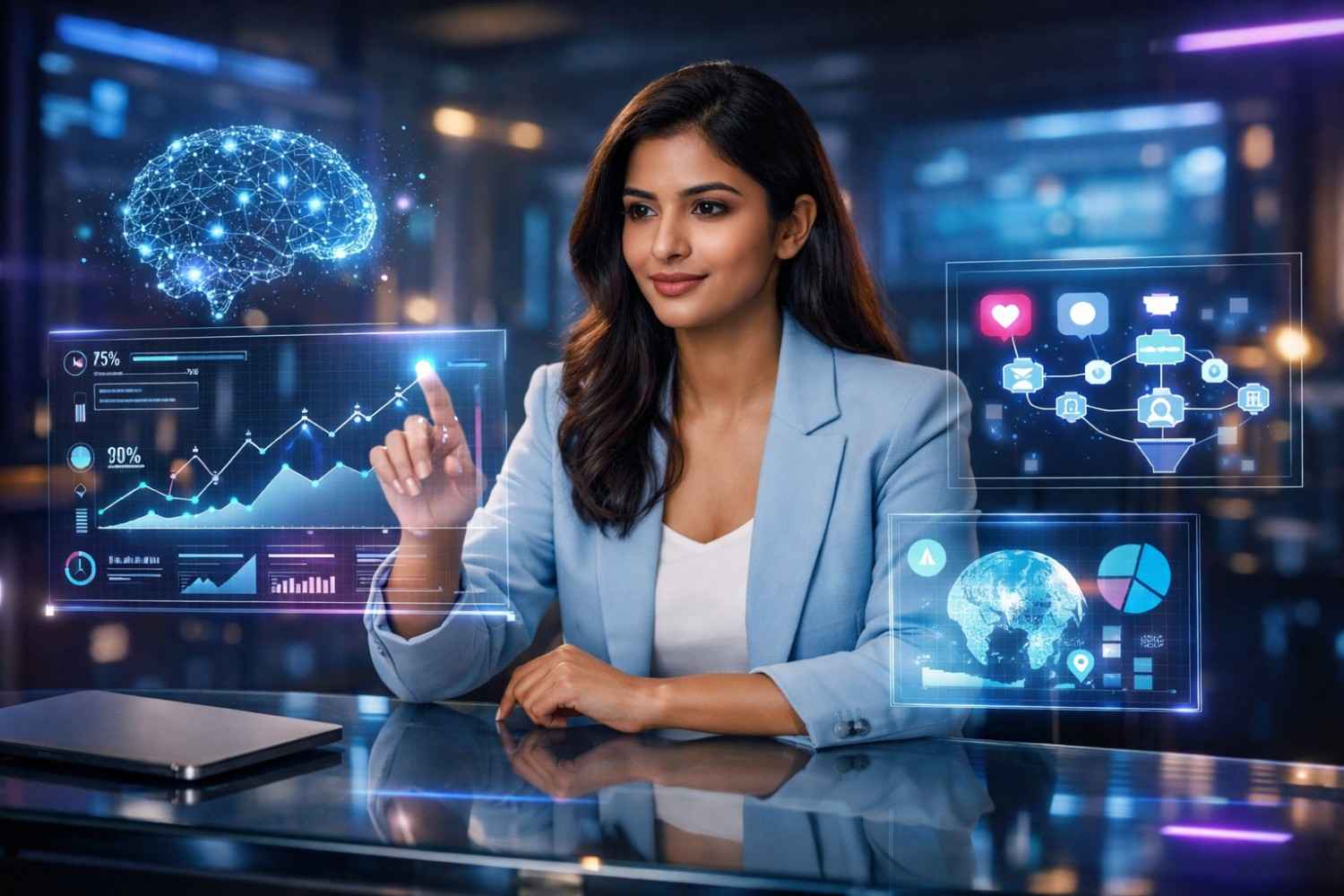
Digital Marketing in 2026: What New Tools & Platforms to Learn
The digital marketing industry is growing faster than it has ever been, which will provide some opportunities and some challenges for anyone who is intending to enter the industry. If you are planning to establish a career in this space by attending a digital marketing course in Kerala, getting accustomed to new technologies, platforms and strategies will become a core function of your job.
The technologies and platforms shaping the future of marketing, the key skills every digital marketing student needs to master, and how emerging ideas like neuro-digital marketing are transforming the way brands connect with their audiences.
1. AI-Powered Marketing Tools
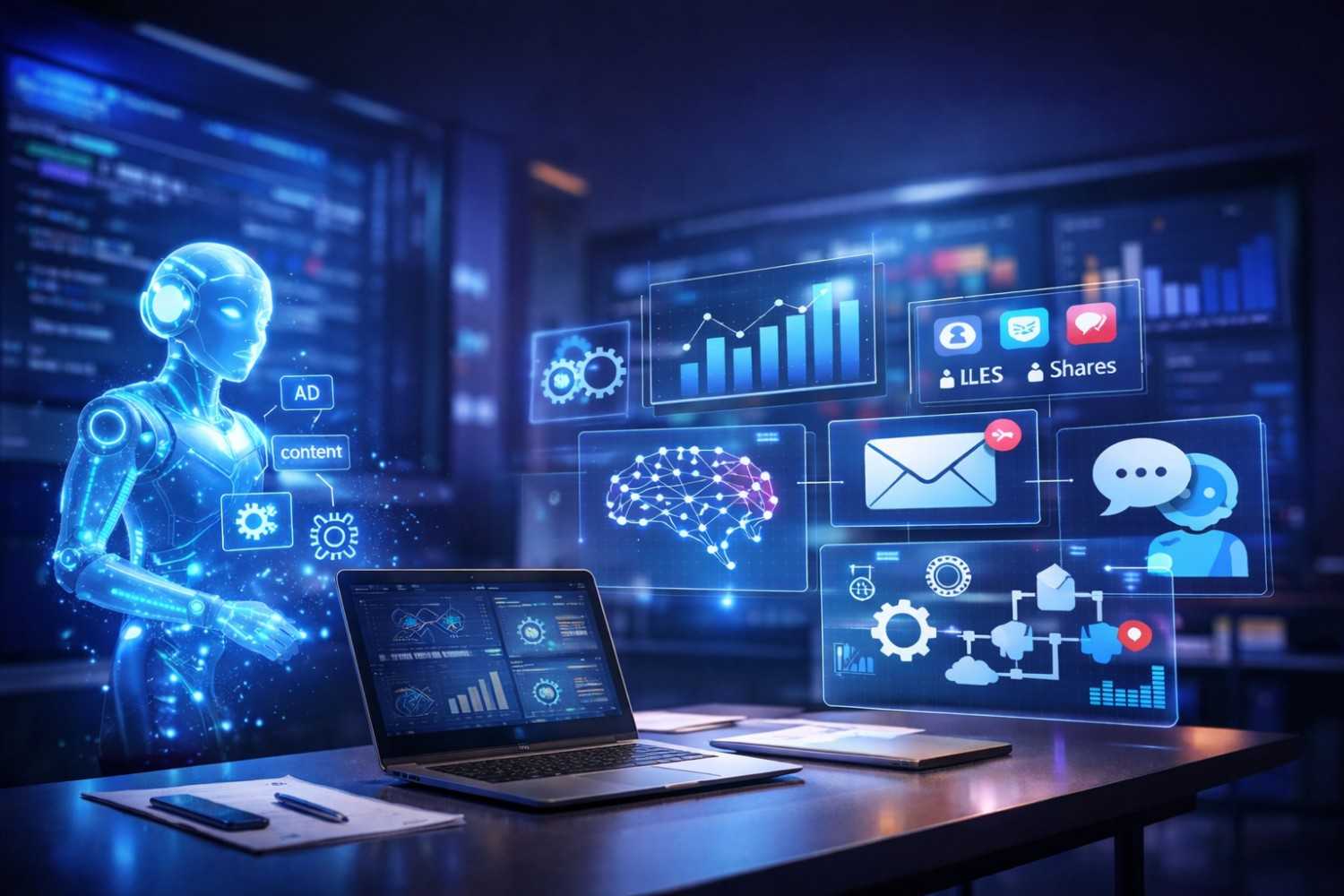
Artificial Intelligence (AI) is no longer a hype-word; it is the infrastructure of digital marketing today. By 2026, AI tools will have developed into an even more integral facet of campaign automation, content creation, audience targeting, and predictive analytics. Marketers will be reliant on AI to:
- Identify customer behaviors with unmatched precision
- Scale personalization of ad campaigns
- Automate repetitive tasks (such as keyword bidding and A/B testing)
For learners, one of the key skills they’ll need to learn is to leverage AI tools, including ChatGPT-based assistants, AI managers, and intelligent CRMs. Every digital marketing course will include modules on AI, but within three to five years, applying practical skills will be more valuable than understanding theory.
2. Voice Search & Conversational Marketing
Voice assistants – including Alexa, Google Assistant, and Siri – have become ingrained in modern day-to-day life. The trend toward voice search is inescapable for marketers. By 2026, nearly half of all online searches are expected to take place by voice command.
This shift calls for the content to change from being predominantly keyword-based content to more conversational queries. Marketers are required to implement specialties like voice search SEO, natural language optimization, and designing conversational chat bots for customer service.
3. Social Commerce Platforms
Social media platforms such as Instagram, TikTok, and YouTube have already moved away from the separation of content versus commerce. In 2026, the phrase “social commerce” will be commonplace where users can complete the entire journey of shopping from a native app.
Innovative platforms such as TikTok Shop, YouTube Live Shopping, and Meta’s combined marketplaces will amplify the effect of influencer sales. For digital marketers, this means you will need to:
- Be skilled in shoppable video content.
- Run influencer collaborations.
- Implement cross-platform ad integration.
Courses teaching advanced social media marketing strategies will prepare learners to gain in e-commerce and retail.
4. AR & VR Marketing
AR (Augmented Reality) and VR (Virtual Reality) are not just ideas of the future; they are now becoming everyday tools for marketers. Businesses can now offer interactive experiences for their customers with AR/VR by creating the ability for customers to engage with products and brands in a way like never before using different AR/VR platforms like Meta’s Horizon Worlds, Snapchat AR filters, and the thousands of shopping apps now in use that let customers virtually try on clothes or easily visualize their new furniture in their living room.
In 2025, AR/VR experiences will be a key part of digital marketing strategies across industries. Brands who have embedded AR/VR into their digital marketing efforts will be able to build stronger levels of customer engagement and increase levels of trust by using AR/VR experience to differentiate themselves from their competitors. As AR/VR experiences become more adopted, marketers will have the ability to design personal experiences that blend entertainment and utility that can turn incidental consumers into loyal customers.
5. Neuro-Digital Marketing: The New Frontier
Arguably the biggest transformative strategy on the horizon, will be neuro-digital marketing. This innovative technique uses neuroscience factored with digital tools to investigate the brain activity, emotions, and behaviors of consumers. Brands may have the ability to develop advertising and campaigns specifically designed to engage subconsciously.
Some of the possibilities include wearable devices that track emotional responses to an advertisement, eye movement to measure engagement with an ad, and artificial intelligence that assists in fine-tuning campaigns based on real time neural imaging feedback.
Students participating in a digital marketing program will need to develop new both technical capabilities as well as an academic background in consumer psychology.
6. Data Privacy & Ethical Marketing
With new tools come new obligations. In 2026 data privacy legislation will be tighter than today. Marketers will need to have great respect for true consumer consent, responsible handling of cookies, and ethical engagement with data.
Trust will become a source of competitive advantage. Brands that are transparent in how they use data will perform in a more effective manner than brands that rely on intrusive advertising methods. From a teaching perspective a course in digital marketing should cover obligations of data protection laws, ethical marketing tactics, and responsible artificial intelligence.
7. Platforms to Master – Essential
Starting in national exams in 2026, digital marketers will have to be familiar with an array of platforms that can include:
- Search Engines- Google is still king, however Bing with AI and smaller search engines are emerging.
- Social Media- TikTok, Instagram, LinkedIn, and new AI platforms.
- Video Platforms- YouTube and Twitch among others to offer interactive live-streaming.
- E-commerce places: Amazon, Flipkart, and social commerce in the mix.
- Analytics: Google Analytics 4, AI dashboards, and customer journey software.
Those students who take an anticipatory view, and who experiment on these tools early, will enhance their relevance in a competitive market.
Conclusion
In 2026 marketing will be defined by AI, voice search, AR/VR, and even neuroscience. This is not just learning how to use the tools of the future, but how to think about shifting consumer behavior.
If you are considering a career in this field, taking one of the digital marketing courses in Kerala is a solid step toward your success. With the right training, you will learn these platforms of the future, give way to neuro-digital marketing, and maintain your position as a future professional.
Ibis is accredited by the IACET (International Accreditors for Continuing Education and Training) and offers IACET CEUs for its learning events that comply with the ANSI/IACET Continuing Education and Training Standard. This prestigious accreditation underscores the quality and global acceptance of the education provided at Ibis.



.webp)