


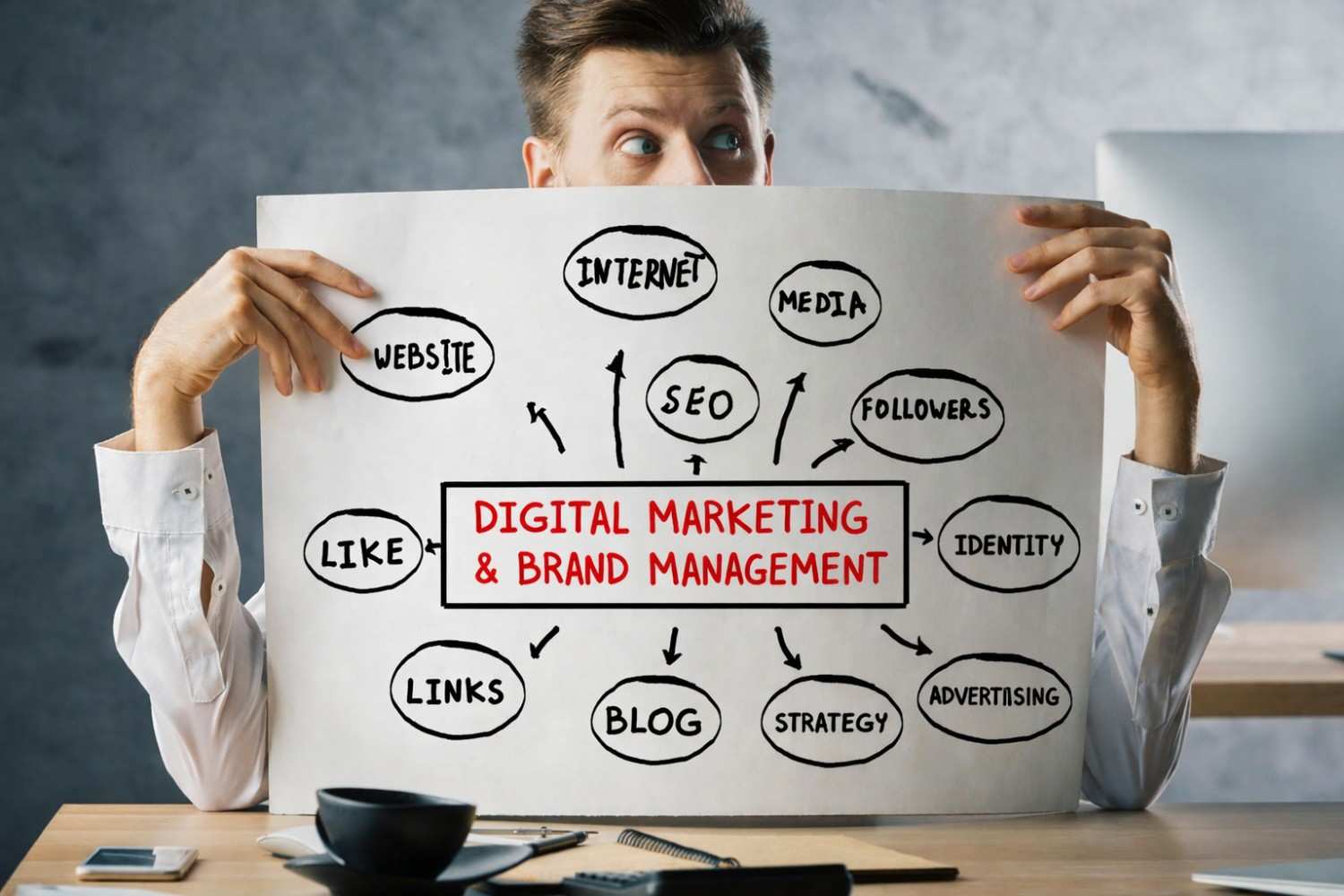
What is Digital Marketing and Brand Management?
As digital marketing and brand management has become an integral part of the current business landscape, the current competitive market space continues to see increasing numbers of students and professionals enrolling into digital marketing courses. This increase in enrollment indicates that there is an ever-growing demand for people to possess knowledge and skills regarding the relationship between digital marketing and brand management and how these skills can be used to help create visibility, credibility, and ultimately the long-term value of a company. A complete mastery of both digital marketing and brand management will allow your business to acquire the right target customers; help create a stronger branding image; and enable sustainable growth to be achieved.
Digital Marketing and Brand Management
| Feature | Digital Marketing | Brand Management |
|---|---|---|
| Primary Goal | Lead generation and conversions | Building trust, reputation, and identity |
| Focus | How you reach the customer (Channels) | Who you are to the customer (Identity) |
| Timeline | Short to Medium-term (Campaign-based) | Long-term (Relationship-based) |
| Metrics | CTR, CPC, ROI, Conversions | Brand Sentiment, Loyalty, Equity |
What is Digital Marketing?
Digital Marketing is a form of marketing that uses Online channels (such as Search Engines, Websites, Social Media Platforms, Email & Mobile Applications) to create awareness, generate leads, provide product/service information, sell products/services and retain customers for Business. In contrast to Traditional Marketing, Digital Marketing enables Businesses to:
- Reach the correct Target Market with Accuracy
- Track Performance in Real Time
- Maximize Return on Investment on Campaigns
Basically, Digital Marketing delivers the right message, to the right audience, at the right time – online.
Key Components of Digital Marketing
Digital marketing encompasses various strategies designed to work in conjunction to support the business’s and brand’s goals.
1. Search Engine Optimization (SEO)
SEO is the term used to describe the way a website’s content is optimized in order to rank higher on search engines such as Google. When a business correctly implements SEO, it helps to increase its organic presence within search engine result pages (SERPs), generate long-term traffic and create trust among customers.
2. Search Engine Marketing (SEM)
SEM is the use of paid search engine advertising, which appears at the top of search engine results pages (SERP) when users conduct keyword searches. SEM is a fast way to generate immediate traffic to your business’ website.
3. Social Media Marketing
The primary goal of social media marketing is to use social media (e.g., Instagram, Facebook, LinkedIn, and X) as a way for businesses to create brand awareness and build relationships with their customers through direct interaction. Social media allows a brand to have a more direct means of communication with their audience and to create engagement and growth among their audience.
4. Content Marketing
Content marketing includes the creation of blog posts, videos, infographics, and guides to create educational material and establish brand authority. Content marketing also serves the dual purpose of attracting and connecting with potential customers.
5. Email Marketing
Email marketing allows businesses to build relationships with leads and continue to build relationships with existing customers by delivering specific and customized messages related to their products and services directly to people’s email inbox.
6. Performance Marketing
Performance marketing looks at measurable results, such as click-through rates, lead generation, and conversion rates. Performance marketing can help businesses better understand the return on their investment.
What Is Brand Management?
Brand management involves the development and management of your brand’s identity, reputation and perception with your customers so they will have a positive experience when they interact with your brand.
You must manage your brand so there is a consistent image, message and quality for every customer interaction with your brand, regardless of how, when, or where it occurs.
Brand management includes much more than a logo and colour scheme; it involves trust, emotions, and long-term relationships.
Core Elements of Brand Management
Brand Identity
Brand Voice and Messaging
Brand Positioning
Customer Experience
Brand Reputation
This is a collection of visual elements associated with your brand like logos, colour schemes, typography, and design styles.
This defines the method in which your brand communicates with its customers. You can communicate with your customers in a formal, friendly, professional, or conversational manner.
This defines the unique aspects of your brand that differentiate it from its competitors.
Every interaction (web site, phone, email, etc.) your customers have with your brand affects how your customers perceive your brand.
Your customers create brand trust through online reviews, social media mentions, and customer feedback.
Why Digital Marketing Is Important for Brand Management?
Digital marketing strengthens brand management in several powerful ways:
Brand Presence Consistency
Real Time Customer Interaction
Using Data for Branding
Global Expansion with Localized Targeting
Digital marketing is an excellent tool for establishing a consistent brand presence through consistent messaging used on company websites, digital advertising campaigns, and social media platforms.
Brands are able to connect with their customers in real-time. When brands connect in this way they build trust and loyalty with customers.
Analytics tools can provide brands with valuable insights about their customers and help them refine their branding strategies.
Brands that utilise the power of digital marketing can now have a global reach and target specific audiences and markets in specific regions with pinpoint accuracy.
The Role of Content in Digital Marketing and Branding
Content is the central core of both digital marketing and brand management. Quality, relevant content attracts authority, trust and ultimately brand recognition among consumers.
- Blogs – educate customers and improve SEO
- Videos – increase engagement and brand recall
- Social Media posts – humanise brands
- Case Studies – establish credibility
Brands with a clear content strategy are more likely to produce marketing materials that align with the brand’s core values and reflect the needs and expectations of its target audience.
Role of Social Media in Brand Management
A significant way that brands are perceived is by how they use social media. Social media lets brands:
- Engage with customers
- Show off their personalities
- Respond to customer problems in real time
- Foster community
- Develop customer loyalty
To achieve good brand recognition, brands should post consistently, use the same visual identity and maintain the same tone across different platforms.
Digital Marketing Metrics That Support Brand Growth
By measuring the right Digital Metrics, brands can measure their overall brand performance as well as their overall brand strength, through:
- Web traffic and engagement
- Conversion rates
- Social media reach and engagement
- Brand mentions and sentiments
- Retention rate of customers
All of these help brands to quantify, develop and continuously improve the strategies they use for marketing and building a brand.
Challenges of Digital Marketing and Brand Management
Digital Marketing and Brand Management come with a number of challenges:
High Competition
Maintaining Brand Integrity
Rapid Trend Changes
Managing Reputation
- Use of AI for Content Creation
- Search Engine Optimisation (SEO) for Voice Search
- Use of Influencers to Tell Your Brand’s Story
- Use of Augmented Reality (AR) and Virtual Reality (VR) To Provide Immersive Experiences
- Real-World Training
- Development of Strategic Thinking Skills
- Work Experience on Real-World Projects
The most crowded spaces are the most competitive, and there is no shortage of creative methods to stand out in the crowd.
Different platforms generally communicate different messages making it a challenge to maintain a consistent message across all platforms.
With the constant changes to algorithms and the influence of consumer preferences, companies must be able to respond quickly.
Negative comments or feedback can severely impact the trust that customers have in a brand. If the business does not appropriately manage negative comments or feedback, customers may lose trust in the brand.
Future of Digital Marketing and Brand Management
The future of digital marketing and branding is driven by personalization, automation, and artificial intelligence.
Emerging trends include:
Digital Brands that align Performance Marketing with Strong Brand Values will dominate the Digital World’s Marketplace.
Importance of Learning Digital Marketing and Brand Management
Professionals who hold credentials in both Digital Marketing and Brand Management are highly coveted across a wide range of industries. Companies want people with the ability to grow a company’s revenues while protecting a brand’s image.
When considering Digital Marketing Institutes in Kerala, it’s important for learners to be able to obtain:
The combination of these elements provides the learner with the knowledge and skills necessary for managing Performance-Based Marketing and Developing Long Term Brand Values.
Conclusion
Digital marketing and brand management used to be distinct fields; however, today they work together to create and sustain growth for businesses. Digital Marketing is designed to attract and convert customers while Brand Management focuses on creating trust and loyalty while providing long-term value.
Ibis Academy is one of the leading providers of professional training in Digital Marketing and Brand Management. With our highly-skilled instructors, practical learning methods, and job-ready courses, Ibis Academy provides students the tools they need to develop the digital marketing skills required to succeed in the competitive marketplace.
Ibis is accredited by the IACET (International Accreditors for Continuing Education and Training) and offers IACET CEUs for its learning events that comply with the ANSI/IACET Continuing Education and Training Standard. This prestigious accreditation underscores the quality and global acceptance of the education provided at Ibis.




.webp)